
Cedar Park City Directory Sources
Cedar Park has no verified printed city-directory run in the official sources reviewed. That gap matters. The Cedar Park Public Library has local-history and reference material, but its published sources do not identify a Cedar Park directory, obituary index, or cemetery-name database. Use the library catalog and ask staff about on-site material rather than treating a nearby volume as a Cedar Park list. For an older household, the dependable shelf is often a combined record set: the local library for holdings, Austin collections for regional context, and Williamson County films for land and family evidence.
| Collection | Years | Where Held | Access |
|---|---|---|---|
| Cedar Park local-history and reference material | Exact directory run not located | Cedar Park Public Library | Catalog search and staff inquiry; some material is on-site only. |
| Scanned Austin directories | 1872-73, 1877-78, 1881-82, 1885-86, 1889-90, 1897-98, 1906-07, 1912-13, 1918, 1922 | Austin Public Library and Portal to Texas History | Regional migration, road, and business context only. |
| Directory of City of Austin | 1889-1958, surviving years vary | Austin History Center | Morrison & Fourmy and R. L. Polk volumes for Austin-area research. |
| Williamson deed and tax films | Deeds 1848-1908; tax rolls 1848-1910 | Baylor through the TSLAC county guide | Tract, ownership, and family-history evidence when no local directory exists. |
The table is deliberately not a promise that every Cedar Park family appears in print. An Austin entry can be useful when a person moved through the region or used an Austin business address. It does not establish Cedar Park residence. Likewise, a deed owner can differ from a household member. Record the locality heading, year, and repository with every find before joining it to a Cedar Park address.
The screenshot comes from the Cedar Park Public Library catalog, where the available controls include a Look for box, filters, Search, and Clear.
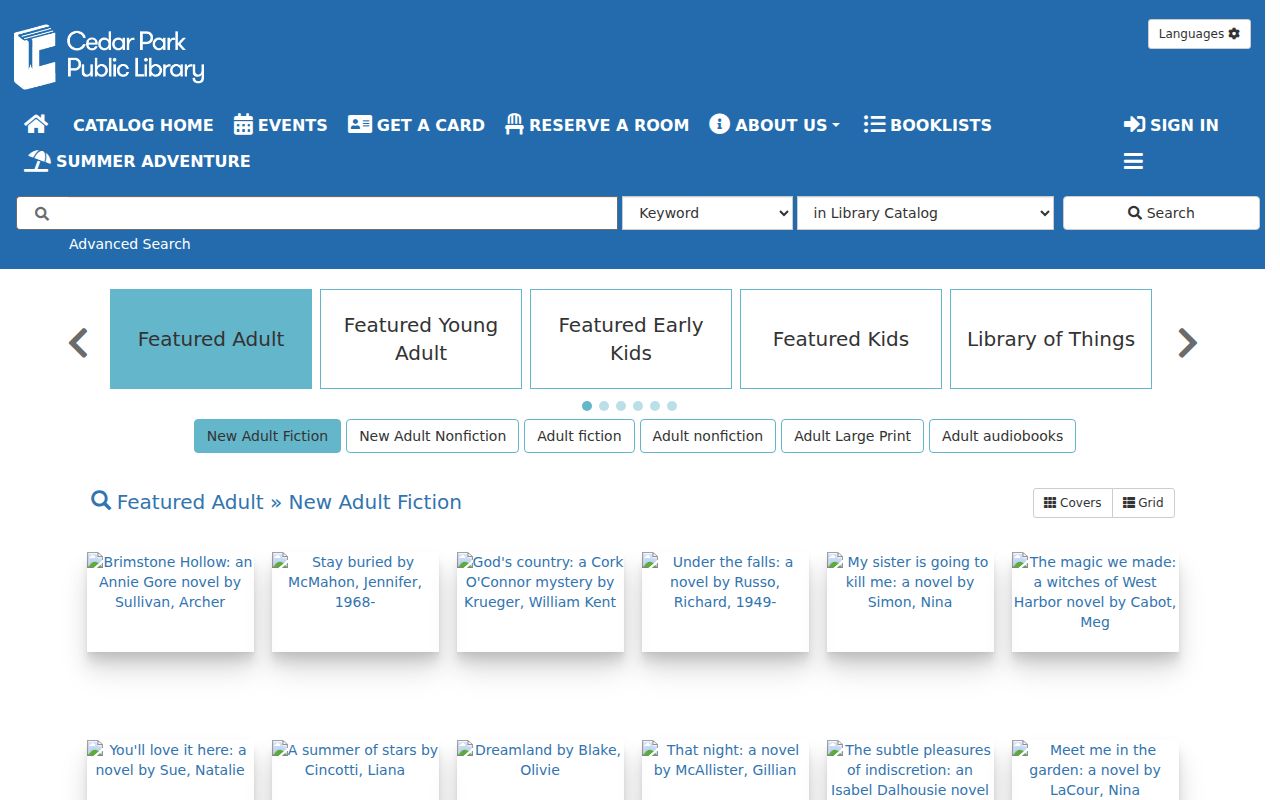
Catalog results are a holdings check, not proof that a city directory exists. The collection policy notes that local-history and reference materials, along with some current periodicals, may require on-site use.
Cedar Park City Directory Clues
The library is one route, but municipal material can supply names and dates that make a catalog search sharper. The Cedar Park archive accepts a keyword, archive selection, time period, start date, end date, and Search. Its groups include Cedar Park Pulse, budgets, fire and police annual reports, library annual reports, and water-quality material. These records can identify an official, a board participant, a civic program, or a dated local event. They are not a household roll and should never be read as one.
The current library is at 425 South Parkwest Drive, Cedar Park, Texas 78613, and lists 512-401-5600. Posted hours are Sunday 12-7, Monday through Thursday 9-9, and Friday and Saturday 9-5. Bring a precise surname, alternate spelling, community name, or approximate year. If a catalog item is unavailable online, ask whether it is reference-only and whether staff can identify a related local-history title. A narrow question is more useful than a request for every item about a family.
Note: A city archive item can document a public role or dated action, but it does not confirm a person’s home address or current household.
Cedar Park City Directory Gap
The documented fallback is regional, not local. Austin Public Library’s digitized directories are scanned and searchable for the listed Austin years. The Austin History Center citation identifies directory volumes from 1889 through 1958 and names Morrison & Fourmy Directory Co. and R. L. Polk & Co. The cited collection covers Austin, Rollingwood Village, and West Lake Hills. It does not supply a Cedar Park city directory run.
Use an Austin result as a lead only when the surrounding record supports a regional connection. A road, business, church, or census locality may explain the connection. A later Cedar Park address does not turn an Austin entry into proof of an earlier Cedar Park residence. The broader Austin History Center collection also includes census material, yearbooks, church and social-club directories, internment records, and city documents. Those categories can fill context, but the location label still controls the conclusion.
The screenshot comes from the regional digitized directory collection that serves as Cedar Park’s documented fallback.
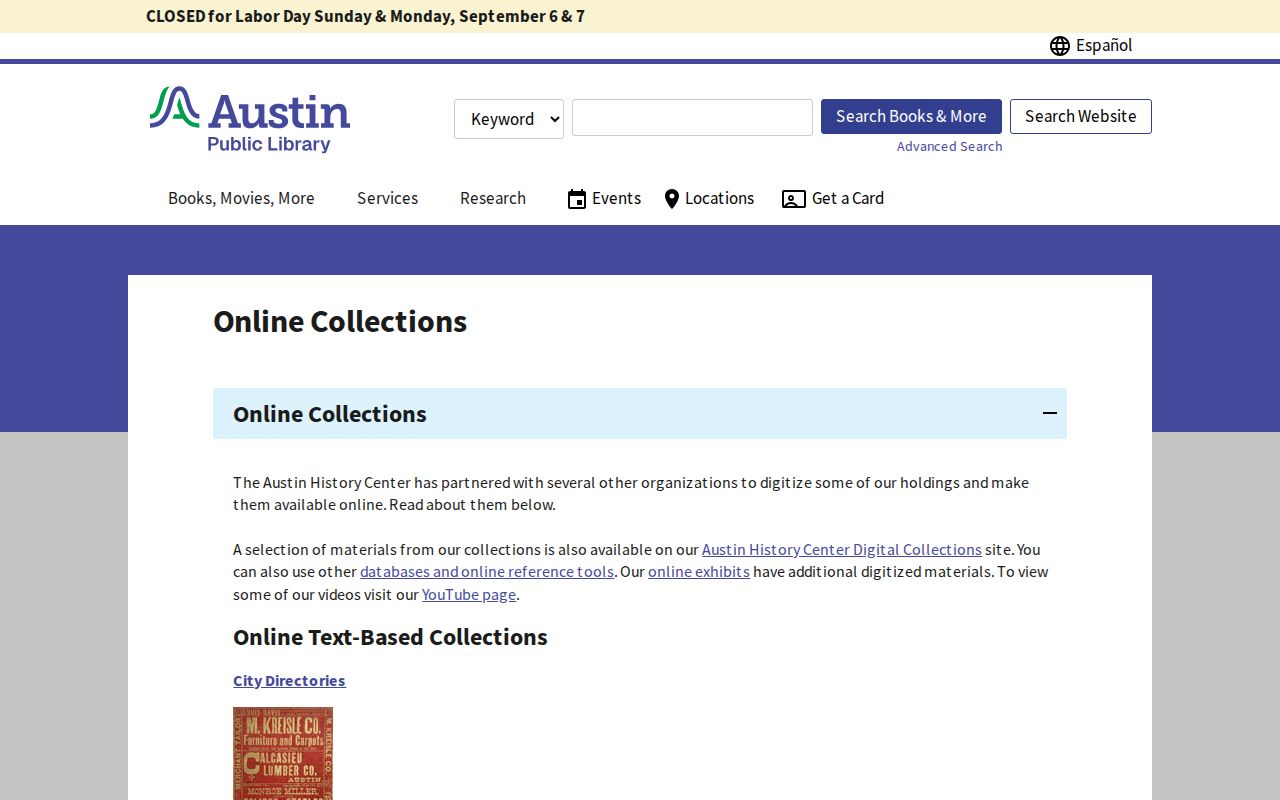
The collection is valuable for a regional trail, yet the image does not erase the local gap: no official Cedar Park printed directory run was located.
Reading Cedar Park City Directories
No official Cedar Park entry could be inspected, so do not invent an abbreviation key or assume every volume has the same layout. When an Austin scan or a later library-held volume is relevant, transcribe what the volume actually prints. Keep the directory title, publisher, volume year, page, locality heading, and image or page link with the name. A historical entry is a dated snapshot. It is not a current address, and a printed line can contain a spelling error, an old mailing location, or a business address.
| Exact name | Copy the printed spelling, initials, and any household notation. |
|---|---|
| Address line | Preserve the house number, street, unit, and locality heading as printed. |
| Occupation | Record any printed occupation or business/employer line without turning it into a current claim. |
| Family marks | Note a spouse, widow, owner/renter, or telephone notation only if the volume prints it. |
| Source trail | Keep the title, publisher, year, page, abbreviation key, and image location together. |
- Criss-cross directory
- A directory arranged by address or street rather than by surname. No official Cedar Park criss-cross run was located.
- Householder index
- An index that groups an address under a named household. Its format depends on the individual volume.
- Abbreviation key
- The legend printed in a directory that explains shortened words and marks. Photograph or transcribe it before interpreting an entry.
Cedar Park Directory Names and Places
Older records may not use the modern city name. The Williamson County historical narrative places George and Harriet Cluck near an early settlement around 1873, identifies Running Brushy as the 1874 post-office name, and says the railroad settlement used Brueggerhoff before Cedar Park was adopted in 1887. The railroad arrived in 1882, and Cedar Park incorporated in 1973. Those changes make place-name searching a core part of city-directory research here.
Search Cedar Park, Running Brushy, and Brueggerhoff separately. Add New Hope, Cluck, Inman, Cedar Park Cemetery, an abstract or tract, and a known road when the result is thin. A nineteenth-century item may be indexed by post office, rail settlement, church, farm, or tract instead of a present street. Preserve the original term in notes, then compare it with a deed, map, or census record rather than silently converting it to a modern label.
- 1874: Running Brushy received its post-office name.
- 1882: The railroad arrived and the settlement used Brueggerhoff for a period.
- 1887: Cedar Park became the adopted community name.
- 1973: Cedar Park incorporated, creating a later municipal record layer.
- 2025: The city recorded the new library ribbon cutting, which helps date older library references.
Trace Cedar Park City Directory Clues
A household trail works best when each source answers a different question. A directory, if one is relevant, can provide a date and printed address. Federal census schedules through 1950 can add household context, while a tax roll or deed can test land ownership. The federal 72-year release rule explains why 1950 is the newest released census in this research. The 1890 census was mostly destroyed, so a missing 1890 result is a national records break, not evidence that a Cedar Park family was absent.
- Search the library catalog, Austin regional collections, and local place-name variants for the surname and year.
- Capture the directory title, publisher, locality heading, page, printed name, address, and any key or mark.
- Compare the result with the closest released census, preserving the census community or street wording.
- Use the TSLAC Williamson County guide to route older deed, tax, probate, court, birth, marriage, and naturalization research to Baylor or the appropriate custodian.
- Separate an owner, a household member, and a mailing contact. They can be different people.
Baylor holds the filmed Williamson County material identified by the state guide, including deed records from 1848-1908, tax rolls from 1848-1910, and probate minutes through 1934. The film route is often the next step when an online index or catalog returns nothing. It is also a reason not to mistake a missing screen result for a missing historical record. A present-day address chain belongs with the street records, while the films preserve the older regional record trail.
Note: Census and directory evidence describe a historical moment; compare several dated records before drawing a household conclusion.
Cedar Park Cemetery Record Trail
The Cedar Park Cemetery historical marker record supplies an unusually specific bridge from community history to an original land record. It identifies infant Emmett A. Cluck as the first burial in 1901 and describes a cemetery deed made December 24, 1912, then recorded June 25, 1913, in Williamson County Deed Records volume 159, pages 316-319. Search that citation through the county index or request the county record before relying on a transcription.
New Hope adds another local path. The research identifies a church charter in 1868, a Martha Elizabeth Inman burial in 1869, and school use in the church building from 1871 to 1919. Church minutes, cemetery markers, deeds, and census records may connect families that never appear in a documented Cedar Park city directory. Each one needs a source date and a clear distinction between a marker transcription and the original record.
Cedar Park Library Changes
Current routing matters because library references can age quickly. The city records a November 1, 2025 ribbon cutting for the new library in its FY2026 budget. A July 10, 2026 city notice says the former library became RE|CREATE, a multigenerational community center. Use the current library listing for a visit or catalog question, and treat an older Discovery Boulevard reference as historical context rather than current contact information.
The change does not create a lost directory collection. It is a useful reminder to verify the holding location before making a trip or interpreting an older citation.